

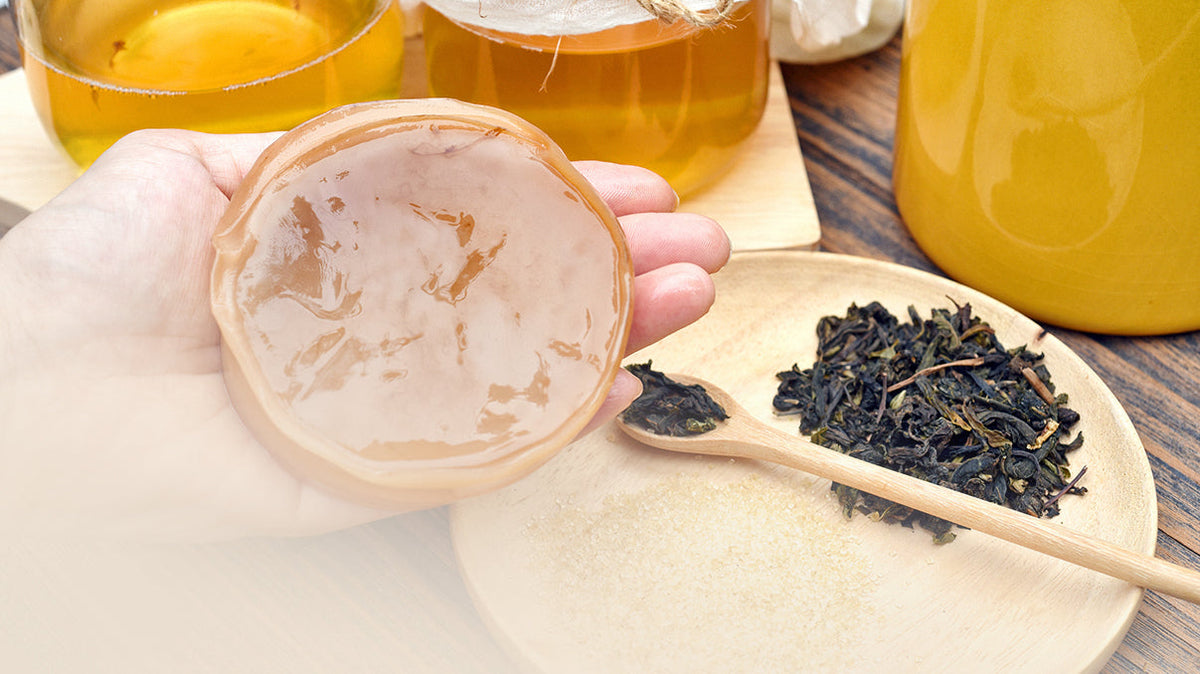

You're probably wondering: What is a "mushroom" doing in my drink? Actually, the kombucha tea mushroom is neither a classic mushroom nor a lichen, but a cellulose matrix colonized by microorganisms. This culture is also called a SCOBY. In this post, you'll learn how to use it, care for it, and grow a new kombucha culture at home.
In addition to useful information about the tea mushroom, we'll show you how to use a kombucha culture in a fermentation vessel, what's important for its care, and what alternative uses there are.
Kombucha? Tea mushroom? The basics at a glance!
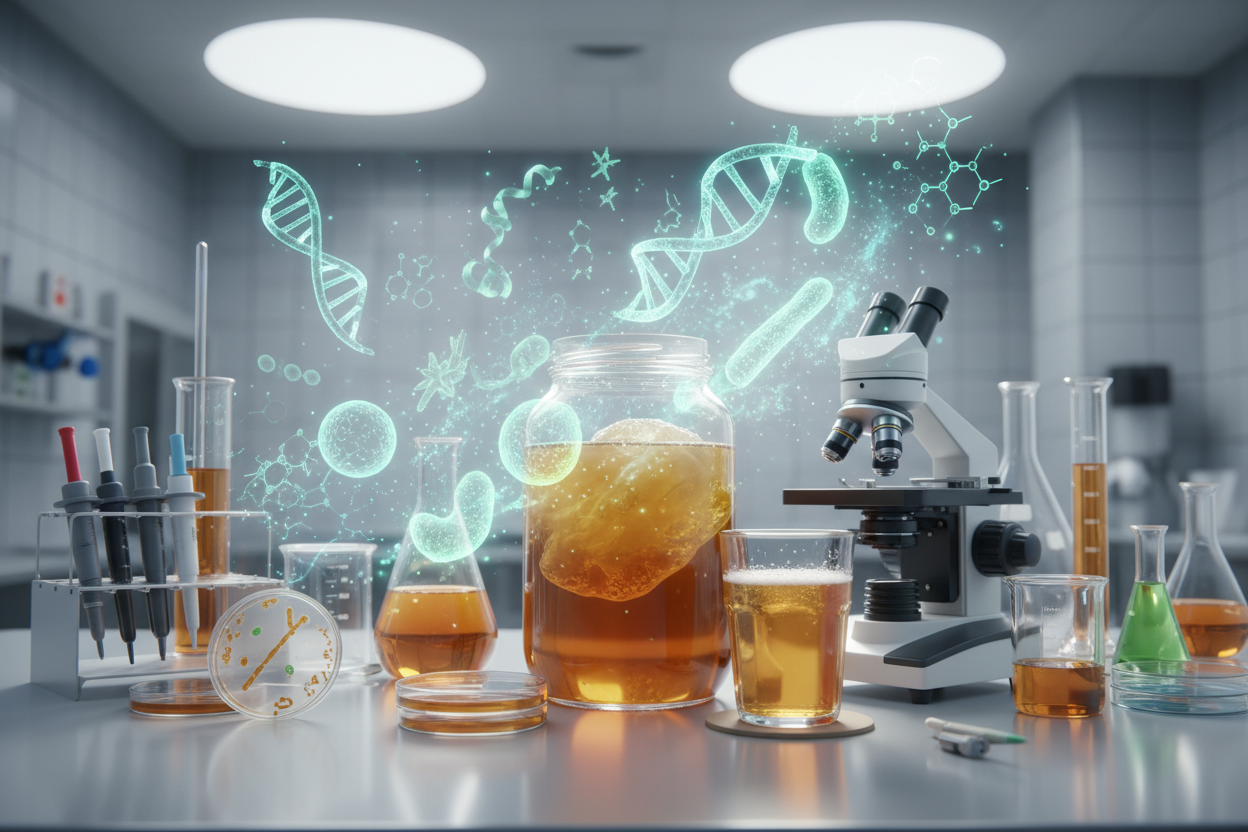
Kombucha (pronounced: kom-boo-cha) is a fermented drink made from sweetened tea. Bacteria and yeasts work together in the process. The visible, often jelly-like layer is called a kombucha mushroom or SCOBY. SCOBY stands for Symbiotic Culture of Bacteria and Yeast, meaning a symbiotic community of bacteria and yeasts. The SCOBY is not simply a single organism, but part of a complex community of microorganisms.
The kombucha culture enables the fermentation of the sweetened tea, thereby influencing the composition and typical sweet-tart taste of the finished drink.
What do you do with a kombucha mushroom? A suitable, well-maintained culture can be used for further fermentations. For this, in addition to the SCOBY, sufficient, suitable, acidic starter liquid is particularly important. It helps to acidify the freshly prepared tea from the very beginning.

What is the kombucha tea mushroom made of?
The SCOBY is not a lichen or a classic mushroom. Its visible structure consists predominantly of bacterial cellulose, in which bacteria and yeasts of the kombucha culture live. Therefore, it is often colloquially referred to as a tea mushroom or yeast mushroom, although these terms are not entirely biologically accurate.
Yeasts can metabolize sugar into ethanol and carbon dioxide, among other things. Certain acetic acid bacteria can then convert ethanol into organic acids such as acetic acid in the presence of oxygen. The interaction of the microorganisms involved shapes the fermentation process.
Kombucha SCOBYs are often round and flat, and their consistency is usually jelly-like. The surface can be smooth or uneven. During fermentation, holes, wrinkles, or small bulges can form. The color and clarity can also vary depending on the tea, culture, and fermentation conditions. However, such features alone do not prove that the culture is healthy or safe. Visible mold is a warning sign: In this case, you should discard the entire batch, including the SCOBY.
What components can be found in kombucha?
Depending on the culture, tea, and fermentation conditions, different components have been detected in kombucha studies. Not all are automatically contained in every SCOBY or finished drink, nor are they necessarily present in nutritionally relevant amounts.
- Bacteria: various types of bacteria, including acetic acid bacteria and other groups, depending on the culture.
- Yeasts: different yeast strains that may be involved in the breakdown of sugar.
- Enzymes: biological molecules involved in metabolic processes.
- Vitamins: certain vitamins have been detected in individual studies. The actual levels depend on the recipe and fermentation.
- Minerals and trace elements: for example from the raw ingredients used. The amounts can vary.
- Organic acids: including acetic acid and other acids, the composition of which depends on the manufacturing process.
- Amino acids: can occur in different amounts depending on the raw materials and fermentation.
- Polyphenols: secondary plant compounds that are naturally contained, among other things, in the tea used and can change during fermentation.
- Alcohol: can be produced as a natural product of fermentation. The actual content depends, among other things, on the recipe, fermentation time, temperature, and storage.
- Caffeine: may be contained in the finished drink if caffeinated tea such as black or green tea is used. The content depends, among other things, on the tea and preparation.
Behind the scenes: How does the SCOBY work?
Nutrients and ingredients
The visible kombucha culture often grows on the surface of the nutrient solution. There, oxygen is available to the microorganisms. Yeasts metabolize sugar into ethanol and carbon dioxide, among other things. Other microorganisms further utilize various intermediate and end products, forming organic acids in the process, for example.
The acidic environment can make it difficult for some unwanted microorganisms to grow. However, it does not replace clean working practices, a suitable recipe, or controlled fermentation conditions.
The SCOBY grows and thrives
Certain bacteria form cellulose, from which a new SCOBY layer can develop on the surface. Over time, the layer can become thicker, or several layers can form. How quickly this happens depends, among other things, on the culture, temperature, oxygen supply, and the composition of the nutrient solution.
Sometimes a SCOBY sinks to the bottom of the fermentation vessel. This alone does not mean that the culture is unusable. A new layer can form on the surface. However, appearance is not the only deciding factor: Starter liquid, hygiene, and the development of the batch are also important.
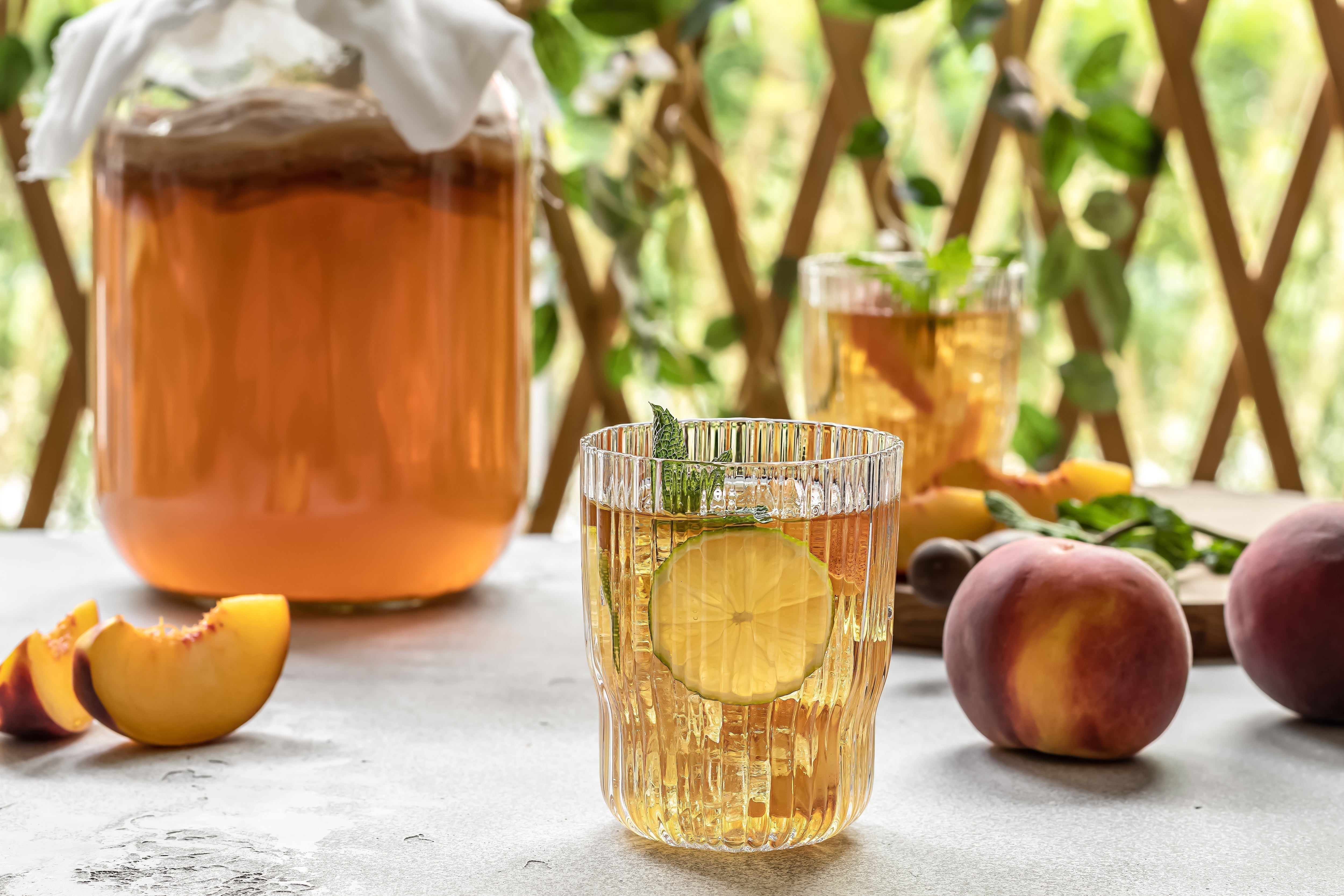
For fermentation, the fermentation vessel is usually covered with a clean, breathable cloth and securely fastened. This allows air to reach the batch while making it difficult for insects and coarse contaminants to enter.
The fermented final product – kombucha tea
Simply put: Kombucha is a fermented tea drink. Sweetened tea, such as green or black tea, and a suitable kombucha culture are used for its production.
Kombucha often tastes sweet-tart and, depending on the recipe, can also be tart or fruity. How much residual sugar is contained in the finished drink depends on the original recipe and the course of fermentation. Depending on the culture and manufacturing process, different organic acids, microorganisms, and other fermentation products can be produced.
Possible effects of kombucha
Numerous health effects of kombucha are traditionally discussed and discussed online. At the same time, science is investigating, among other things, the fermentation, the microorganisms contained, organic acids, and other ingredients.
However, no blanket statements can be drawn from these studies that kombucha can prevent, treat, or alleviate diseases or specific symptoms. Results from laboratory or animal studies are also not automatically transferable to humans. What is crucial is what was actually investigated in the respective food and under the respective study conditions.
Let the kombucha mushroom sprout: Grow a kombucha culture yourself
If you want to grow your own kombucha culture, you need suitable, unpasteurized kombucha as starter liquid as a starting point. This introduces microorganisms into the batch and ensures an important initial acidification. Not every kombucha labeled as "raw" or unpasteurized is automatically suitable as a starter; make sure that the product is suitable for this and does not contain unsuitable additives.
You can also get a culture from someone who makes kombucha themselves, or use a suitable starter kit. An existing SCOBY is helpful, but the acidic starter liquid remains an important component of the batch.
For a kombucha batch, you basically need water, tea, sugar, and suitable starter liquid or an existing kombucha culture. Work with clean utensils and a suitable fermentation vessel. How quickly a visible SCOBY layer forms depends, among other things, on the culture, temperature, recipe, and hygienic conditions.
Important: A new layer on the surface does not prove that the batch is safe. Use a proven recipe with suitable proportions and pay attention to the fermentation conditions. If visible mold appears, you should discard the entire batch and not try to remove only the affected area.
Once upon a time … A brief history of the tea mushroom
Where does the kombucha culture come from?
Kombucha has a long history, but its exact origin cannot be clearly proven. The drink is often associated with East Asia, especially China. Japan also plays a role in the history of the name. However, historical accounts are not so clear that a single place of origin or an exact origin date can be stated with certainty.
A Chinese legend
One of the stories surrounding kombucha links the drink to the Chinese Emperor Qin Shi Huangdi, who is said to have searched for means to extend his life in the 3rd century BC. In some versions of the legend, a special drink is attributed to him.
It is not historically proven that the emperor actually drank kombucha or that the drink existed in its current form at that time. The story should therefore be understood as a legend and not as reliable evidence for the origin of kombucha.
Kombucha, the name
The name "kombucha" is often associated with the Japanese words "kombu" and "cha", which refer to seaweed and tea, respectively. However, in Japanese, Kombu-Cha traditionally refers to a drink made from kelp. How the term became used in the West to refer to the fermented tea drink has not been conclusively determined.
Leftover kombucha mushroom? 4 alternative use ideas
A culture can be interesting not only for making new kombucha. If you have a SCOBY left over, there are various recipe and DIY ideas. Keep in mind that a SCOBY is a moist, microbially colonized material and that not every use is suitable for consumption or application to the skin.
1. Refreshing recipe for summer: Sweet Beet (for 2 servings)
- 4 cm peeled and finely chopped ginger
- 300 ml kombucha
- 100 ml freshly squeezed orange juice
- 100 ml carrot juice
- 100 ml beetroot juice
- 2 teaspoons freshly squeezed lemon juice
And here's how it's mixed: Put all the ingredients in a blender and blend for about 15 seconds. Then serve immediately. Use kombucha that is suitable for consumption and keep the drink refrigerated until serving.
2. Kombucha as a dressing for your salad
A tart dressing can be prepared from kombucha. For this, you can mix a small amount of finished kombucha with oil, herbs, and spices, and season to taste.
Some people also use longer-fermented kombucha as a base for vinegar. However, a drink does not automatically become a safe or sufficiently acidic vinegar through longer fermentation. The development of acidity depends on the culture and manufacturing conditions. If you want to make kombucha vinegar, use a suitable, proven method and do not rely solely on taste or fermentation time to assess safety.
For a simple salad dressing, it is therefore easiest to use finished kombucha as a tart ingredient and prepare the dressing fresh.
3. Kombucha face mask
DIY recipes for face masks with SCOBY, kombucha, and oil can be found online. However, caution is advised when applying homemade kombucha mixtures to the skin: The composition and acidity are not standardized, and the microbiological load cannot be reliably assessed at home. A proven cosmetic benefit has also not been established by the mere use of a kombucha culture.
If you want to try facial care, products that have been developed and dermatologically tested for this purpose are the more reliable choice. You should not bring homemade fermentation batches near the eyes or use them on irritated or injured skin.
4. Kombucha foot bath
Foot baths with very acidic kombucha or homemade kombucha vinegar are also occasionally described as a DIY idea. However, the acidity and composition of such mixtures can vary greatly. Essential oils can also cause skin irritation.
For a foot bath, warm water is the simpler choice. If you use bath additives, they should be intended for application to the skin. In case of open wounds, irritated skin, or known skin problems, you should avoid acidic or homemade fermented mixtures.
Kombucha mushroom "SCOBY" – no fear of bacteria!
Our bodies house a great diversity of microorganisms. This so-called microbiome and its interactions with the human body are the subject of intensive research. How diet, lifestyle, and individual foods influence the microbiome is complex and cannot be reduced to a single fermented food.
The SCOBY vividly demonstrates how bacteria and yeasts work together in a complex community during fermentation. However, this does not mean that every culture or homemade batch is automatically safe. Clean working practices, suitable starter liquid, and controlled fermentation conditions remain important.
If you are interested in your own fermentation, you can use a suitable kombucha culture to prepare your own kombucha at home.
FAQs about the tea mushroom
How is a kombucha mushroom formed?
A SCOBY is formed through the interaction of various bacteria and yeasts in a kombucha culture. Certain bacteria form cellulose, from which a visible layer can develop on the surface of the batch. Yeasts metabolize sugar into ethanol and carbon dioxide, among other things. Certain acetic acid bacteria can further convert ethanol into organic acids such as acetic acid in the presence of oxygen.
How can you store the kombucha tea mushroom?
A SCOBY hotel is a vessel in which a kombucha culture is stored with sufficient acidic starter liquid. Use a clean vessel and a suitable cover. Check the culture regularly for noticeable changes. If visible mold appears, you should discard the entire batch. How long a culture can be safely stored depends, among other things, on hygiene, acidity, storage conditions, and the condition of the culture.
Can you eat the kombucha mushroom?
The cellulose matrix of the SCOBY consists predominantly of bacterial cellulose. Although it can fundamentally contain edible components, not every culture is suitable for consumption. The safety of a SCOBY from a homemade fermentation cannot be assessed solely on the basis of its appearance. Therefore, do not simply use it as a food ingredient if safe production and suitability are not guaranteed.
Can you freeze the SCOBY mushroom?
Freezing can damage microorganisms. It is not guaranteed that a culture will reliably ferment again afterward. If you want to store a SCOBY, a suitable vessel with acidic starter liquid is a common alternative. Check the culture regularly and only continue to use it if it shows no signs of mold or other noticeable changes.
What does kombucha taste like?
Kombucha often tastes sweet-tart and slightly tart. The taste depends, among other things, on the type of tea, the recipe, the fermentation time, and a possible second fermentation. The drink can be further flavored with juice, herbs, fruit, or ginger. Depending on the manufacturing process, sweetness, acidity, and carbonation can vary significantly.
Why is kombucha healthy?
How kombucha can be nutritionally classified depends on its specific recipe. For example, sugar content, the tea used, other ingredients, and processing after fermentation play a role.
Unpasteurized kombucha may contain live microorganisms. Organic acids and other fermentation products are also produced during fermentation. However, no blanket effect on the gut, immune system, or specific symptoms can be derived from this. Kombucha should be considered a food and not a substitute for medical treatment.
When should you drink kombucha?
You can basically drink kombucha at whatever time of day suits you best – for example, with a meal or as a refreshment in between. A specific time is not required. Pay attention to the product information regarding storage and the individual caffeine and alcohol content, which can vary depending on the product.
How much kombucha should you drink?
A general daily maximum amount cannot be specified for all kombucha products and people. If you are trying kombucha for the first time, you can start with a small amount and see how you tolerate it. Also take into account the information on the label as well as the sugar, caffeine and possible alcohol content of the respective product.
Summary: The most important things to know about the kombucha SCOBY
- A SCOBY is not a classic fungus: The visible layer consists mainly of bacterial cellulose and houses a community of bacteria and yeasts.
- The culture enables fermentation: Microorganisms process the components of the sweetened tea and form organic acids and carbon dioxide, among other things.
- Starter liquid is important: It introduces microorganisms into the batch and ensures initial acidification.
- Appearance alone is not proof of safety: If mold is visible, the entire batch should be discarded.
- Implement DIY ideas with caution: Not every kombucha culture is suitable for consumption or for use on the skin.


Share:
1 comment
bitte genaue Angabe wie man KOMBUCHA macht und wie lange stehen lassen sodass er nicht só sauer wird
🙏🍀🙏🍀