



Scoby sounds a bit like a wonderful mythical creature from a fantasy world. In fact, it is the kombucha culture. What exactly does the name stand for? How do SCOBYs work in detail? How do you grow your own little kombucha mushroom and how can you tell if it is healthy? Here you will find answers to the most important questions about the SCOBY and kombucha fermentation.
First things first: What exactly is kombucha?
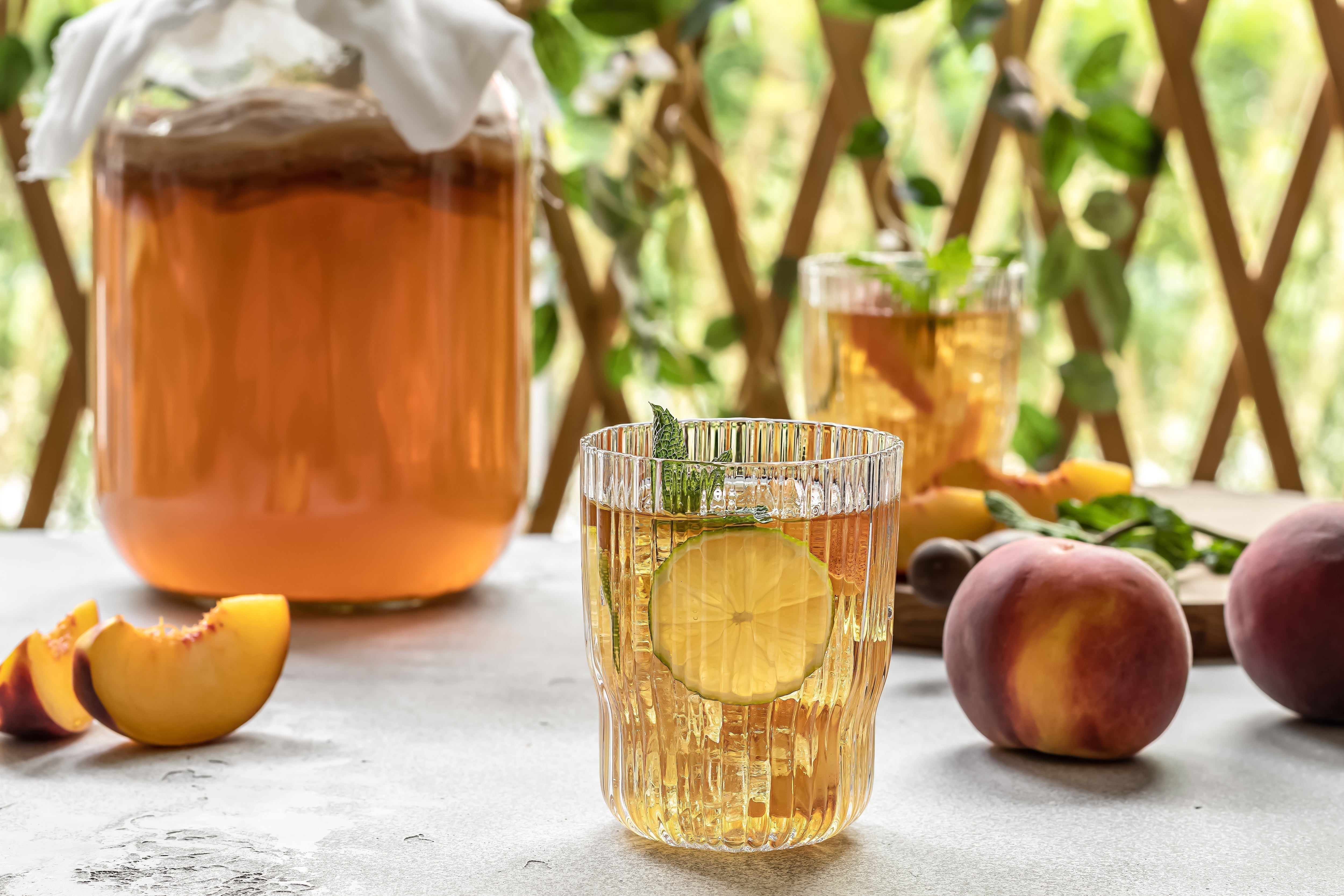
Kombucha is a fermented tea drink with a long tradition. With the help of the SCOBY – also called kombucha culture or colloquially kombucha mushroom – sweetened tea and an acidic starter liquid are turned into a fermented drink. The SCOBY culture consists of various microorganisms, including bacteria and yeasts, which work together during fermentation. The duration is often about 7 to 14 days, but can vary depending on the temperature, recipe, and culture. Tea, sugar, water, and starter liquid are thus turned into a drink with organic acids and other fermentation products. The exact composition depends on the ingredients and the manufacturing conditions. Would you like to learn more about kombucha and the microorganisms involved? You can find more information on our KOMBUCHERY blog.
What does SCOBY stand for?
You have probably already wondered what the term stands for and where it comes from. SCOBY is the English abbreviation for Symbiotic Culture of Bacteria and Yeasts. Simply put, it refers to a community of bacteria and yeasts. The culture is also colloquially referred to as a mushroom, miracle mushroom, or kombucha mother, although biologically it is not a real mushroom. SCOBYs can be stored in a suitable container with enough acidic starter liquid. How long a culture remains usable depends on several factors, including hygiene, acidity, storage conditions, and its condition. In case of mold or other noticeable changes, it should be completely discarded. SCOBYs or kombucha cultures form the basis for the fermentation of our unpasteurized raw kombucha.
What is a Scoby made of?
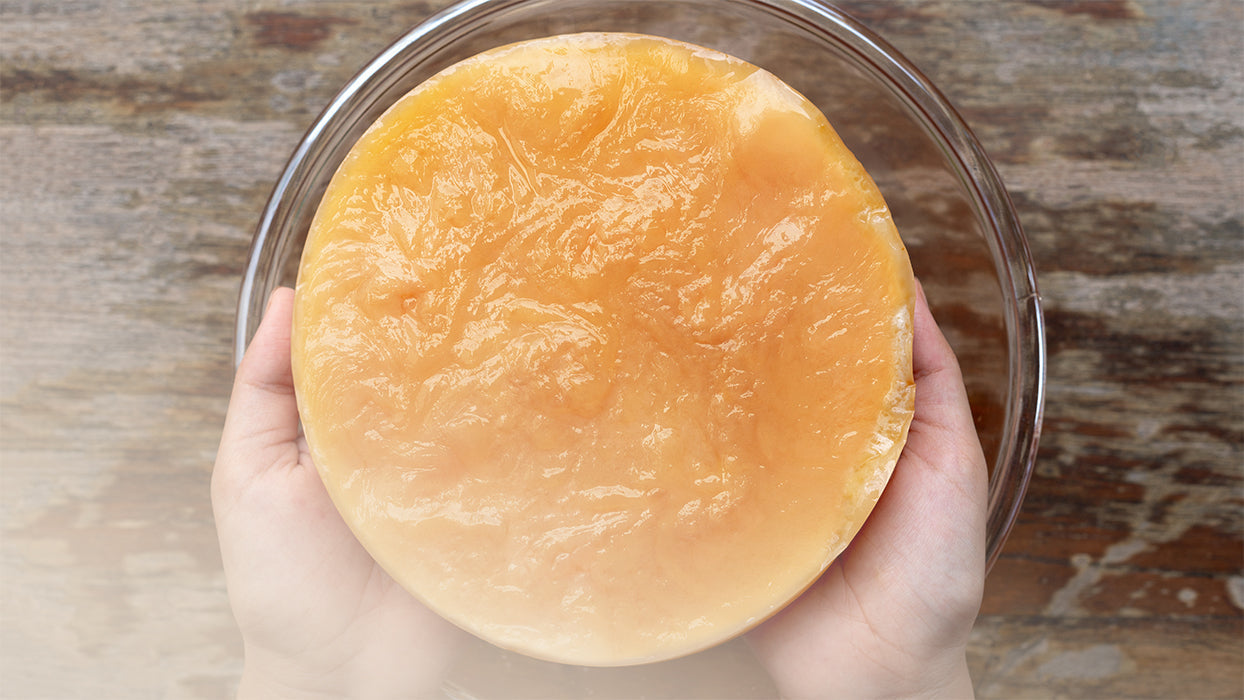
The SCOBY is actually not a mushroom or a lichen. Its visible structure consists predominantly of bacterial cellulose, in which bacteria and yeasts of the kombucha culture live together. It forms a whitish to beige, jelly-like layer that can take on different shapes. Various microorganisms live in this structure, including lactic acid and acetic acid bacteria as well as yeasts, depending on the culture. They work together during fermentation. Yeasts can metabolize sugar into ethanol and carbon dioxide, among other things. Certain acetic acid bacteria can then convert ethanol into organic acids such as acetic acid in the presence of oxygen. The interaction of these microorganisms shapes the taste and composition of the kombucha.
At a glance:
- Bacterial cellulose as the basic structure of the visible layer
- Bacterial cultures, including acetic acid and lactic acid bacteria, depending on the culture
- Yeast cultures
- Other microorganisms of the kombucha culture
- Cooperation of the microorganisms during fermentation
This is what a kombucha SCOBY looks like
A SCOBY often forms a round, pancake-like shape made of whitish to beige, jelly-like layers. These feel slimy and may initially seem a bit unusual. Depending on the culture, tea, and fermentation conditions, the color and structure can vary. The surface can be smooth or uneven. During fermentation, holes, bulges, bubbles, or brown yeast strands may form. Such changes are not automatically a sign of spoilage. If you grow your own SCOBY at home, the newly forming layer is often thin at first and gets thicker over time. A slightly sour or vinegar-like smell can be normal for kombucha. Noticeable mold or a distinctly unpleasant, unusual smell, however, are warning signs.

Check your Scoby: Is this normal?Are you not entirely sure if your tea mushroom is still okay? We will help you identify typical changes in your SCOBY. Some features are normal during fermentation. However, in case of suspected mold or other obvious abnormalities, you should be careful. My SCOBY … … has green, black, or other noticeable, fuzzy spots: This can indicate mold. In case of suspected mold, discard the entire culture along with the starter liquid. Do not just remove the visible spot and reuse the SCOBY. … is not smooth, but has holes and bulges: Unevenness and holes can occur during fermentation and are not automatically a problem. Also assess the color, smell, and other conditions. … has different shades: Beige and brown tones as well as brown yeast strands can occur. However, noticeable, fuzzy, or unusually discolored spots should not be considered normal without carefully checking them. … has small white bubbles or damp, light spots: This can be part of the fermentation process. Dry, furry, or fuzzy spots on the surface can, however, indicate mold. If in doubt, you should discard the starter. … lies at the bottom of the container: This can happen. A SCOBY does not have to float on the surface permanently. A new layer can form on the surface. … is dark brown and falling apart: Older cultures can discolor and partially fall apart. This alone neither proves that they are healthy nor that they are spoiled. Carefully check the entire starter and discard it in case of suspected mold or other obvious abnormalities. … smells like vinegar: A sour or vinegar-like smell can be normal for kombucha. A rotten or otherwise distinctly unusual smell is a warning sign. Do not rely exclusively on the smell when making your assessment. … sinks to the bottom of the container: Don't panic: This can happen. A new SCOBY layer can form on the surface over time. However, sinking alone does not say anything certain about the quality of the culture. |
This is what a healthy Scoby looks like!

This is what mold on a kombucha culture looks like!

From Scoby to kombucha: How the tea mushroom works
- Similar to kefir and kefir grains, kombucha is made with the help of a culture that gets the fermentation process going.
- The culture of bacteria and yeasts uses the sweetened tea as a nutrient solution.
- A tea infusion made from black tea or a blend with green tea is common. Which type of tea is used influences the aroma and composition of the resulting drink.
- During fermentation, a new, jelly-like SCOBY layer can form on the surface of the starter. The existing culture can also sink to the bottom of the container. Over time, further layers can form and thicken.
- The yeasts metabolize sugar into ethanol and carbon dioxide, among other things.
- Certain bacteria further metabolize ethanol and other components of the starter, forming organic acids as well as other fermentation products. The interaction of microorganisms, oxygen, temperature, and fermentation duration influences the taste and composition of the kombucha.
The symbiosis with an unusual appearance really does a fantastic job!
Making kombucha yourself: Here's how [Recipe]: Making kombucha yourself – Recipe for beginners
Where can I get a Scoby for kombucha?
Now that you already know so much about the miracle mushroom, you probably want to know how you can get one for your home. This is possible in several ways: You can grow a SCOBY yourself, buy a culture, or have one given to you by someone who already ferments kombucha.
Making a Scoby yourself
Many people are unaware of it, but growing your own kombucha SCOBY is possible with a little patience. For this, you need sweetened tea and unpasteurized kombucha as an acidic starter liquid, for example our Original. With clean utensils and suitable fermentation conditions, you can observe the development of a new SCOBY layer. During this time, pay attention to hygiene and regularly check the starter for mold or other noticeable changes. You can find detailed instructions for making it at home here.
Making the kombucha mushroom [Instructions]: Making a kombucha mushroom yourself – Instructions for fermentation at home
Buying a Scoby
Various providers sell kombucha SCOBYs and the accompanying starter liquid. This way, you can start directly with an existing culture instead of first growing a new SCOBY layer yourself. The cultures are often offered together with starter liquid. This is usually acidic, unpasteurized kombucha liquid. When buying, pay attention to a reputable source, suitable packaging, and clear usage instructions.
Getting a Scoby gifted
If you are lucky, you know someone who already ferments kombucha and can give you a SCOBY along with enough acidic starter liquid. With this, you can start your own starter. It is important that the culture comes from a hygienically managed fermentation and shows no signs of mold or other abnormalities.
Storing a Scoby for kombucha
The great thing about a kombucha SCOBY is that it can be used for several fermentation batches. With proper care, the culture can be stored for a while. Kombucha fans also lovingly refer to the storage location as a "SCOBY hotel". This is a clean container with enough acidic, unpasteurized kombucha starter liquid. The SCOBY should be completely covered by liquid and the container opening covered with a clean, breathable cloth. The storage conditions, the acidity of the starter liquid, and the condition of the culture are important for safe storage. However, a single pH value does not guarantee that a starter is safe. Therefore, stick to a reliable set of instructions and regularly check the culture.
At a glance:
- Adhere to suitable storage conditions and regularly check the culture.
- No direct sunlight or intense heat.
- Cover the opening with a clean, breathable cloth.
- Keep the SCOBY covered with enough acidic starter liquid.
- Only add additional sugar according to suitable care instructions.
- Storage in the refrigerator can slow down the activity. Before the next fermentation, the culture may need to be adapted back to suitable conditions.
- Follow the care instructions and completely discard the culture in case of suspected mold.
Everything about storage in the SCOBY hotel: SCOBY hotel: Storing your kombucha mushroom correctly
Scoby or not Scoby – the mushroom makes it bubble!
As you have noticed, the SCOBY is a central component of kombucha fermentation. With the help of its community of yeasts and bacteria, a fermented tea drink is created from sweetened tea. However, the presence of living microorganisms does not automatically make a food a probiotic. With a little patience, you can grow a new SCOBY layer at home and thus ferment kombucha. If that is too much effort for you, that is no problem: we already ferment our raw kombucha for you.
FAQs about the Scoby and kombucha
How long does it take to grow your own Scoby?
Depending on the temperature, starter liquid, and other conditions, it can take several days to a few weeks until a visible SCOBY layer forms. Often, about 6 to 21 days are mentioned. However, a fixed duration cannot be guaranteed. Pay attention to clean working and possible signs of mold during the entire fermentation.
Can you accidentally ruin the mushroom?
The kombucha culture can be used for several batches under suitable conditions. Unfavorable temperatures, contamination, or unsuitable fermentation conditions can impair its activity. Use clean containers and utensils, avoid extreme temperatures, and stick to reliable instructions. Clean containers thoroughly with dishwashing liquid and water and rinse them well. Do not use hot tea directly with the SCOBY, as high temperatures can damage the microorganisms. Also make sure that no fruit flies or other contaminants get into the starter.
Can you eat the Scoby?
The jelly-like SCOBY structure consists predominantly of bacterial cellulose. Although there are recipes in which kombucha cellulose is further processed, a self-fermented culture is not automatically suitable for consumption as food. Pay attention to hygienic production and do not use it if you have doubts about its safety.
How is a Scoby formed?
During fermentation, a new, jelly-like layer of bacterial cellulose can form on the surface of the sweetened tea. Microorganisms of the kombucha culture colonize this structure. Over time, the layer can become thicker. The development depends on several factors, including the culture, the temperature, the composition of the starter, and the fermentation duration.
Is it dangerous to grow the Scoby yourself?
A SCOBY can be grown at home. Hygienic working, suitable fermentation conditions, and regular checking of the starter are important. In case of suspected mold, you should discard the entire culture along with the liquid. Small bubbles, damp deposits, and unevenness can occur during fermentation, but are not in every case a reliable proof that the starter is safe. Fuzzy, dry, or noticeably discolored spots are warning signs. If in doubt, you should not use the starter.
How often can you drink kombucha?
There is no consumption amount that is suitable for all people. How often and in what quantity you want to drink kombucha is an individual decision and depends on several factors, including personal tolerance and the composition of the respective drink.
How healthy is kombucha?
Kombucha is a fermented tea drink. How it is classified nutritionally depends on several factors, including the recipe, sugar content, and other ingredients. Kombuchery contains 2.3 g of sugar per 100 ml as well as vitamin C from acerola. The microorganisms and fermentation products contained can vary depending on the recipe and manufacturing process. No specific health effect can be derived from fermentation alone.
Summary: What you should know about the SCOBY
The SCOBY is a culture of bacteria and yeasts that plays an important role in the production of kombucha. Its visible, jelly-like structure consists predominantly of bacterial cellulose. During fermentation, the microorganisms metabolize components of the sweetened tea and form organic acids as well as other fermentation products, among other things. You can grow a SCOBY yourself, buy one, or receive one from an experienced person. What matters are clean working, suitable conditions, and careful checking. In case of suspected mold, you should discard the entire culture along with the starter liquid.





Share: